
HORMONE THERAPY
Your Laser Treatment Went Wrong? Aerolase Can Fix It.
Aerolase safely treats hyperpigmentation, dark spots, and uneven skin tone caused by failed laser treatments with zero downtime.
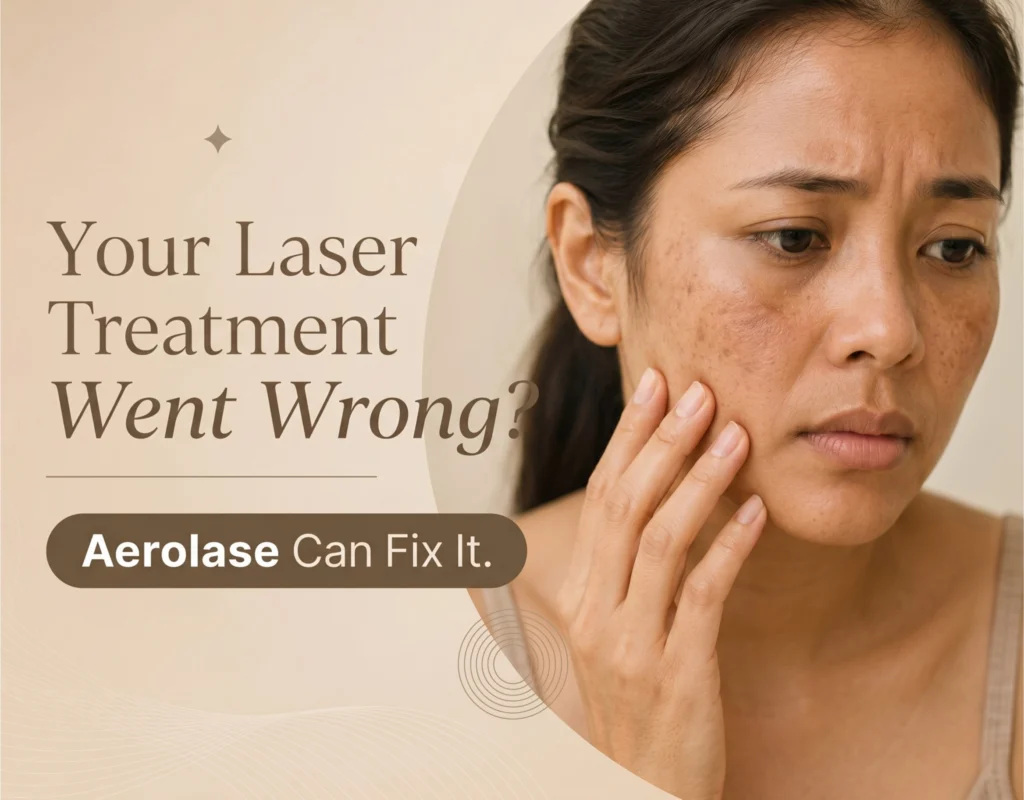
The proven, gentle solution for hyperpigmentation, dark spots, and skin damage caused by a bad laser treatment, backed by science, trusted by skin professionals.
If you are experiencing dark spots, uneven skin tone, or hyperpigmentation after a laser treatment, you are not alone, and your skin CAN be restored.
When a Laser Treatment Goes Wrong: The Uncomfortable Truth Nobody Talks About
You walked into that clinic with so much hope. You wanted clearer skin, a brighter complexion, and a confidence boost.
But instead of glowing results, you left with something nobody warned you about: hyperpigmentation, dark patches, and a skin tone that looks worse than when you started.
First, take a breath.
What happened to you is more common than the beauty industry likes to admit.
Post-inflammatory hyperpigmentation (PIH) and post-laser hyperpigmentation are real, documented complications that can result from treatments performed with the wrong settings, the wrong wavelength, or on skin that was not properly assessed beforehand.
And if you are a person of color or have a deeper Fitzpatrick skin type, your risk was even higher.
The good news?
Aerolase laser technology is specifically designed to fix exactly this problem safely, effectively, and with minimal risk of making things worse.
Why Did Your Laser Treatment Cause Hyperpigmentation?
Before we talk solutions, let us understand what went wrong.
When a laser treatment triggers hyperpigmentation, it is typically due to one or more of the following reasons:
Common Causes of Post-Laser Hyperpigmentation
- Wrong laser wavelength used for your specific skin type or tone
- Settings that were too aggressive, causing excessive heat and inflammation
- Inadequate skin preparation before the treatment
- No patch test performed prior to full treatment
- Insufficient sun protection advice given post-treatment
- Melanin overstimulation triggered by inflammatory response in the skin
- Treatment performed during hormonal fluctuations or while on photosensitizing medications
What happens at the cellular level is this:
Your skin’s melanocytes (the cells responsible for producing pigment) become overactivated in response to the heat and trauma of a poorly matched laser treatment.
The result is an overproduction of melanin, which shows up on the surface as dark spots, patches, uneven discoloration, or a generally muddy, blotchy appearance.
The tragic irony is that many people then rush to get another treatment to fix it, only to make it significantly worse.
That is why choosing the right corrective technology matters enormously.
FACTS:
- 1 in 3 Laser clients experience some form of post-inflammatory hyperpigmentation
- 650nm Aerolase’s unique wavelength that safely targets pigment without skin type restrictions
- Up to 90% Improvement in hyperpigmentation reported in clinical studies using Aerolase
What Makes Aerolase Different From Every Other Laser?
Not all lasers are created equal.
The technology that caused your hyperpigmentation likely delivered energy in a way that your skin simply could not handle.
Aerolase Neo Elite operates on a completely different principle, and that difference is everything.
The Aerolase Neo Elite uses a 650-microsecond pulse duration at a 1064nm Nd:YAG wavelength.
In plain English, this means the laser delivers energy so quickly and so precisely that the surrounding skin tissue does not have time to absorb excessive heat.
There is no burning, no trauma, and most critically, no triggering of the melanin overproduction that causes hyperpigmentation.
This is a game-changer for people who have already experienced post-laser complications.
Where other lasers can re-injure compromised skin, Aerolase is gentle enough to treat even the most sensitive and reactive skin without making existing pigmentation worse.
How Aerolase Treats Post-Laser Hyperpigmentation Step by Step
Here is exactly what happens when Aerolase is used to correct hyperpigmentation caused by a previous laser treatment:
1. Comprehensive Skin Assessment
A skilled aesthetician evaluates your skin type, the extent of pigmentation damage, and the history of your previous treatment.
This personalized assessment is the foundation of a safe and effective treatment plan.
2. Customized Treatment Protocol
Aerolase settings are precisely calibrated to your unique skin.
The 1064nm wavelength is adjusted to target excess melanin deposits in the dermis and epidermis without disturbing surrounding healthy tissue.
3. Gentle Laser Application
The Aerolase handpiece is passed over the treatment area.
Clients typically describe a comfortable warming sensation.
No numbing cream is needed.
Sessions typically last 20 to 40 minutes depending on the area being treated.
4. Melanin Breakdown at the Source
The laser energy is selectively absorbed by the overproduced melanin, breaking up pigment clusters at the cellular level.
Your lymphatic system then naturally flushes these fragmented pigment cells from the body.
5. Collagen Stimulation and Skin Renewal
Aerolase simultaneously stimulates collagen production, helping to restore your skin’s healthy structure, texture, and luminosity for results that go beyond just fading dark spots.
6. Progressive, Visible Results
Most clients begin to see improvement within 2 to 4 weeks of their first session.
A full treatment plan of 3 to 6 sessions spaced 4 weeks apart is typically recommended for optimal, lasting results.
Aerolase Is Ideal For You If You Have…
- Post-inflammatory hyperpigmentation after a previous laser, IPL, or energy device treatment
- Dark spots or patches that appeared or worsened after a chemical peel or microneedling session
- A medium to deep skin tone (Fitzpatrick III through VI) that was treated with an incompatible laser
- Melasma that was triggered or aggravated by a prior treatment
- Sensitive, reactive, or compromised skin that cannot tolerate aggressive procedures
Important: What to Avoid While Your Skin Is Healing
While undergoing Aerolase treatment for post-laser hyperpigmentation, avoid all forms of direct sun exposure without broad-spectrum SPF 50 or higher, do not use retinoids or acids for at least 5 days before and after each session, and never attempt to use another aggressive laser or exfoliating treatment simultaneously.
Your aesthetician will give you a complete aftercare protocol tailored to your skin.
Your Skin Deserves a Second Chance
If a laser treatment has left you with hyperpigmentation, dark spots, or uneven skin tone, please know that you are not stuck with these results.
Your skin has an incredible ability to heal and regenerate when given the right support.
Aerolase is not just another laser on the market.
It is a clinically proven, expertly designed corrective technology that was built with the most sensitive, reactive, and diverse skin types in mind.
Whether your hyperpigmentation appeared after a fractional laser, an IPL session, or any other energy-based treatment, Aerolase offers a safe, effective, and evidence-backed path back to the skin you deserve.
The first step is a thorough consultation with a qualified aesthetician or laser specialist who is experienced in corrective skin treatments.
They will assess your skin, design a personalized plan, and guide you toward real, lasting results.
Do not wait and hope the discoloration fades on its own.
The sooner corrective treatment begins, the better your results will be.
Your skin transformation story does not have to end with a treatment gone wrong.
With Aerolase, it can begin again.
Uneven skin tone, blotchiness, or discoloration following any aesthetic treatment gone wrong.
Table of Contents
- When a Laser Treatment Goes Wrong
- Why Did Your Laser Treatment Cause Hyperpigmentation?
- FACTS
- What Makes Aerolase Different From Every Other Laser?
- How Aerolase Treats Post-Laser Hyperpigmentation Step by Step
- Aerolase Is Ideal For You If You Have...
- Important: What to Avoid While Your Skin Is Healing
- Your Skin Deserves a Second Chance
