HORMONE THERAPY
PDRN & PRP meets Microneedling: The Triple Regeneration Protocol
PDRN & PRP meets Microneedling help repair skin, boost collagen production, reduce scars, improve texture, and restore youthful radiance naturally.
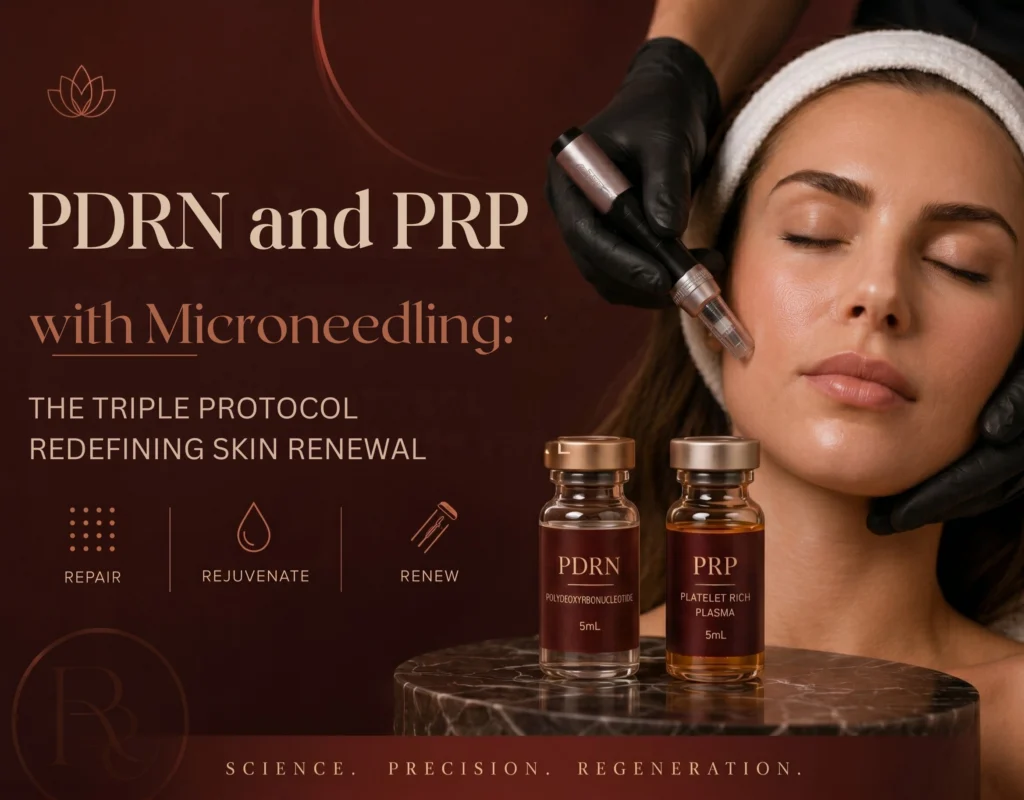
The Regenerative Trio Transforming Modern Skin Therapy
In the world of advanced aesthetics, a new gold standard is emerging, one that harnesses the skin’s own biology to reverse the clock. PDRN, PRP, and Microneedling, when combined, form a regenerative trio that goes far beyond surface-level correction.
Forever Young Complete Healthcare has witnessed firsthand the evolution of skin science, the synergy between these three modalities represents one of the most exciting developments in modern skin therapy. Each treatment is powerful on its own, but together, they create a cascading effect of biological renewal that neither could achieve alone.
Whether you’re battling stubborn acne scarring, early signs of aging, dull and depleted complexions, or simply want to invest in the long-term health of your skin, this triple protocol deserves your attention. Let’s break down exactly what’s happening at the cellular level and why it works.
“The most effective skin treatments don’t fight biology — they amplify it. PDRN, PRP, and Microneedling speak the skin’s own language.”
The Three Pillars, Understanding Each Modality
PDRN
Polydeoxyribonucleotide
Derived from salmon DNA fragments that share a remarkable compatibility with human tissue, PDRN is a powerful tissue-repair agent. It activates A2 adenosine receptors in the skin, triggering a cascade of regenerative processes, stimulating fibroblast proliferation, accelerating collagen and elastin synthesis, and exerting significant anti-inflammatory effects.
Often called “DNA therapy,” PDRN essentially sends repair signals deep into the dermis, reviving dormant skin cells and rebuilding the extracellular matrix from the inside out.
PRP
Platelet-Rich Plasma
Derived from your own blood, PRP (Platelet-Rich Plasma) is a concentration of platelets that are loaded with growth factors, including PDGF, TGF-β, VEGF, and EGF.
Once activated, these growth factors orchestrate an intensive healing response:
- Stimulating stem cells
- Promoting new blood vessel formation (angiogenesis)
- Accelerating collagen deposition
- Dramatically improving tissue quality
Because it comes from your own biology, there is virtually no risk of allergic reaction or rejection. PRP is autologous, intelligent, and incredibly potent.
Microneedling
Collagen Induction Therapy
Microneedling or Collagen Induction Therapy (CIT) uses a device with fine, sterile needles to create thousands of controlled micro-injuries in the skin.
These micro-channels do two critical things:
- They trigger the skin’s natural wound-healing cascade (releasing growth factors, stimulating collagen and elastin production, activating fibroblasts)
- They dramatically open pathways for topically applied substances to penetrate deep into the dermis
On its own, microneedling produces measurable skin improvement. As a delivery vehicle for PDRN and PRP, it is transformative.
The Science
Why Combination Is Key
Microneedling doesn’t just add PDRN and PRP to the equation, it fundamentally changes how they work.
Here’s the Biological Chain Reaction:
1. Micro-Channels Open the Gateway
Microneedling creates up to 200,000 micro-punctures per session. These transient channels bypass the stratum corneum, the skin’s outermost barrier, allowing PDRN and PRP to penetrate depths that topical application alone could never reach (up to 2mm into the dermis versus <0.1mm without needling).
2. Controlled Trauma Primes the Healing Environment
The micro-injuries trigger an immediate release of platelets, cytokines, and growth factors from local cells, creating a primed, growth-factor-rich environment precisely when PRP and PDRN are introduced.
The skin is, in essence, ready to receive and act on these bioactive compounds.
3. PDRN Activates Cellular Repair Machinery
Once in the dermis, PDRN’s A2A receptor agonism switches on anti-inflammatory pathways and upregulates fibroblast activity.
Damaged or senescent skin cells are coaxed back into a regenerative state, rebuilding the collagen scaffold that gives youthful skin its structure and bounce.
4. PRP Growth Factors Direct the Rebuild
PRP’s platelet-derived growth factors (PDGF, TGF-β, IGF, VEGF) act as precise molecular instructions, directing stem cells to differentiate, vessels to grow, and fibroblasts to produce organized collagen.
The result is true tissue regeneration, not just surface repair.
5. Synergistic Collagen Remodeling Persists for Months
The combination drives multi-phase collagen synthesis:
- Type III collagen forms rapidly in the first weeks
- Gradually matures into dense Type I collagen over 3–6 months
Skin continues improving long after the treatment itself, with studies showing peak results at 12 weeks and sustained benefits beyond 6 months.
Clinical Outcomes
What the Skin Benefits
Deep Scar Revision
Atrophic acne scars, surgical scars, and stretch marks are remodeled as new collagen fills in structural deficits at the dermal level.
Skin Firmness & Elasticity
Collagen and elastin synthesis restores the structural integrity that diminishes with age, sun damage, and hormonal changes.
Fine Line Reduction
Superficial and moderate lines soften as the dermis thickens and the extracellular matrix is rebuilt with organized, dense collagen fibers.
Luminosity & Even Tone
Improved cellular turnover and vascularization bring fresh, healthy skin to the surface, reducing dullness, uneven pigmentation, and melasma.
Pore Refinement
Collagen support around follicles tightens enlarged pores, improving skin texture and giving the complexion a refined, smoother appearance.
Hydration & Plumpness
PDRN stimulates hyaluronic acid production in fibroblasts, boosting the skin’s natural moisture-binding capacity for a supple, dewy finish.
Anti-Inflammatory Effect
PDRN’s potent anti-inflammatory action calms reactive, rosacea-prone, and post-acne skin, reducing redness and sensitivity over a course of treatment.
Long-Lasting Results
Unlike surface treatments, the biological changes driven by this protocol are structural. Results continue to develop and can last 12–18+ months with proper maintenance.
Candidacy
Who Will Benefit Most
- Acne Scar Concerns
- Reactive & Sensitive Skin
- Dull, Depleted Complexions
- Post-Procedure Healing
- Preventive Skin Investment
Note: Active acne outbreaks, certain skin conditions, pregnancy, and blood-thinning medications may be contraindications. A thorough consultation with a licensed professional is essential before treatment.
Post-Treatment Protocol
Protecting Your Investment
Hours 0 – 6
Hands Off
Do not touch, rub, or apply anything beyond what your aesthetician provides. The skin is open and vulnerable, let the actives do their work undisturbed.
Days 1 – 3
Minimal Cleansing
Use only a gentle, pH-balanced cleanser and lukewarm water. Avoid exfoliants, acids, retinoids, and active ingredients completely.
Redness and mild swelling are normal.
Days 2 – 5
Barrier Repair
Apply ceramide-rich moisturizers and hyaluronic acid serums to support healing.
Avoid makeup for at least 48–72 hours post-treatment.
Day 1 Onward
SPF is Non-Negotiable
Post-needling skin is acutely photosensitive. Broad-spectrum SPF 50+ must be worn daily without exception for at least two weeks following treatment.
Week 1 – 2
Avoid Heat & Sweat
No saunas, steam rooms, vigorous exercise, or hot showers.
Excess heat increases inflammation and can impair healing. Keep the skin cool and calm.
Week 2 Onward
Resume Actives Gradually
Reintroduce retinoids and acids slowly, starting with the lowest concentration.
The skin is actively remodeling, gentleness is kindness to your results.
“True skin transformation isn’t about covering what’s there, it’s about rebuilding what was lost. PDRN, PRP, and Microneedling give the skin the tools it already knows how to use.”
— The Regenerative Aesthetics Philosophy
Medical Disclaimer
This article is intended for informational purposes only and does not constitute medical advice.
PDRN, PRP, and Microneedling treatments should only be performed by qualified, licensed professionals following a thorough in-person consultation.
Results may vary. Always consult a dermatologist or certified aesthetician before undergoing any aesthetic procedure.
Table of Contents
