
HORMONE THERAPY
Andropause, Testosterone, and Longevity: Why Men’s Hormone Health Matters More Than We Think
Learn how andropause and low testosterone affect energy, mood, libido, and longevity — and why men’s hormone health truly matters.
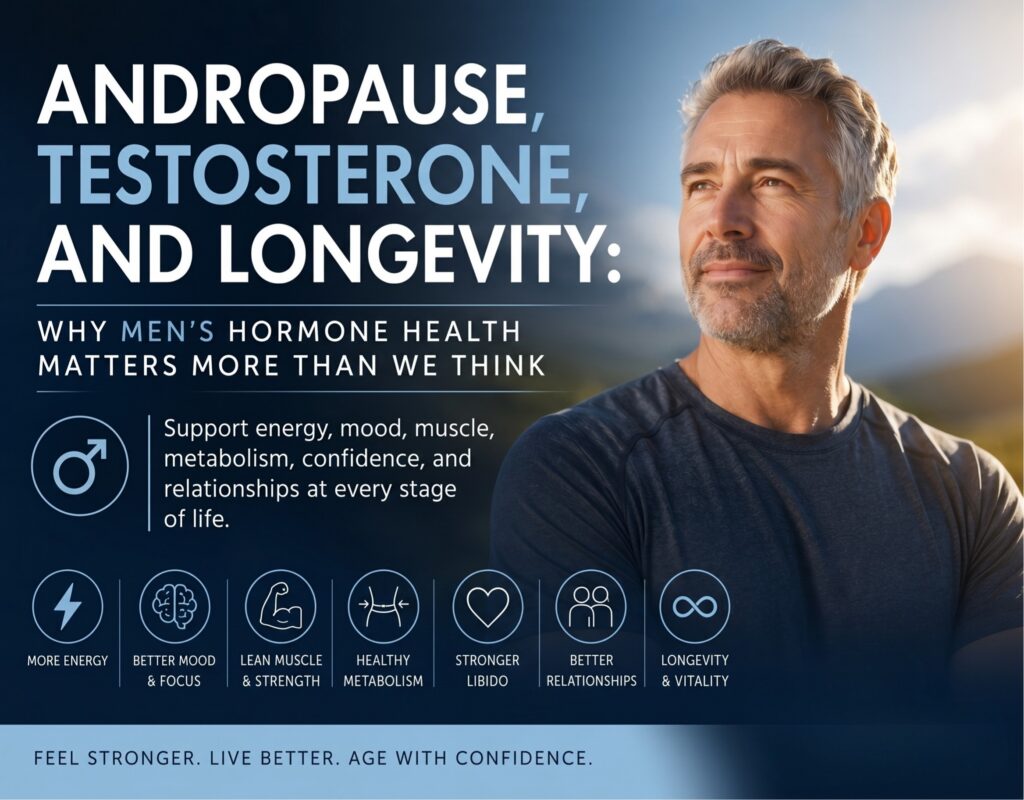
Men’s Hormone Health Deserves More Attention
When people talk about hormones, the conversation usually focuses on women — especially menopause and perimenopause. And that conversation is incredibly important.
For years, many women have felt dismissed when dealing with exhaustion, mood changes, brain fog, low energy, inflammation, sleep problems, or feeling disconnected from themselves.
But hormonal changes do not only affect women.
Men also experience age-related hormone shifts, especially involving testosterone. While the changes may happen more gradually than menopause, they can still significantly impact physical health, emotional well-being, confidence, relationships, and quality of life.
This gradual hormonal decline is commonly referred to as andropause or age-related testosterone decline.
And when testosterone levels begin to drop, the effects often go far beyond libido.
What Is Andropause?
Andropause is often described as the male version of menopause, although the experience is different.
Unlike menopause, which happens during a defined stage of life, testosterone decline in men usually occurs slowly over time. Testosterone levels naturally decrease with age, often beginning during midlife.
For some men, this decline may not cause noticeable symptoms. For others, it can lead to significant physical, emotional, and metabolic changes.
These symptoms may overlap with:
- Chronic stress
- Poor sleep
- Weight gain
- Depression
- Thyroid imbalance
- Sleep apnea
- Insulin resistance
- Alcohol use
- Chronic illness
- Certain medications
That is why proper evaluation is important.
Hormonal symptoms should never be ignored, but they also should not be self-diagnosed without proper medical guidance.
Common Signs of Low Testosterone
Low testosterone can affect men differently depending on age, lifestyle, stress levels, and overall health.
Some men notice physical symptoms first, while others experience emotional or mental changes.
Common symptoms may include:
- Low energy and fatigue
- Reduced libido
- Erectile dysfunction
- Loss of muscle mass
- Increased belly fat
- Poor workout recovery
- Mood swings or irritability
- Reduced motivation
- Brain fog and poor concentration
- Low confidence
- Poor sleep quality
- Emotional withdrawal
- Reduced stamina and performance
For many men, the most difficult part is not simply the symptoms themselves.
It is the feeling of slowly becoming disconnected from the version of themselves they once recognized.
Testosterone Is About More Than Sexual Health
One of the biggest misconceptions about testosterone is that it only affects sex drive.
In reality, testosterone plays a major role in:
- Energy production
- Muscle maintenance
- Bone strength
- Mood regulation
- Motivation
- Metabolism
- Red blood cell production
- Mental clarity
- Physical performance
- Overall vitality
Low testosterone may also overlap with obesity, metabolic dysfunction, insulin resistance, and cardiovascular health concerns.
That is why a complete evaluation should focus on the entire person — not just a single lab result.
A good hormone assessment should look deeper into lifestyle, sleep, stress, nutrition, body composition, exercise recovery, and overall wellness.
The Emotional and Relationship Impact of Hormonal Changes
Hormonal changes do not just affect individuals.
They affect relationships too.
Women going through perimenopause or menopause may experience:
- Mood changes
- Fatigue
- Sleep disruption
- Weight gain
- Anxiety
- Low libido
- Emotional sensitivity
- Vaginal dryness
- Reduced intimacy
At the same time, men may also be experiencing:
- Low testosterone
- Fatigue
- Reduced motivation
- Emotional distance
- Irritability
- Low confidence
- Decreased sexual desire
This often creates a difficult situation where both partners are struggling physically and emotionally at the same time.
She may feel rejected.
He may feel ashamed.
She may think he is emotionally distant.
He may not know how to explain what he is feeling.
This is why hormone health is not only a medical conversation.
It is also a relationship conversation.
When couples understand that hormones may be contributing to emotional distance, fatigue, low intimacy, or mood changes, it creates more understanding and less blame.
How Women Can Support the Men They Love
Women are often the first to notice when something feels different.
They notice changes in mood, energy, sleep, motivation, confidence, or physical health before men are willing to talk about it.
But the approach matters.
The goal is not to shame or criticize.
The goal is to open the conversation with support and compassion.
Instead of saying:
“You probably have low testosterone.”
A better approach might be:
“I’ve noticed you seem more tired and less like yourself lately. Maybe it would help to check your hormones, sleep, or overall health.”
Or:
“You deserve to feel good too. Maybe there’s something physical contributing to how you’ve been feeling.”
These conversations can help men feel supported instead of judged.
Testosterone Therapy: Not for Everyone, but Helpful for the Right Patient
Testosterone therapy can be life-changing for some men when used appropriately and under medical supervision.
However, it should never be approached casually.
Proper hormone care involves:
- Detailed medical evaluation
- Symptom assessment
- Blood work and hormone testing
- Ongoing monitoring
- Personalized treatment planning
Testosterone therapy may affect:
- Fertility
- Red blood cell count
- Sleep apnea
- Acne
- Prostate-related symptoms
That is why individualized care and proper monitoring are essential.
The goal should never be chasing unrealistic masculinity or quick fixes.
The goal is restoring health, balance, vitality, and quality of life safely and responsibly.
Longevity Is Also a Men’s Health Conversation
For many years, men were taught to seek medical care only when something became seriously wrong.
But modern longevity-focused healthcare is changing that mindset.
Today, more men are prioritizing:
- Preventive healthcare
- Hormone optimization
- Sleep quality
- Stress management
- Strength and mobility
- Metabolic health
- Cardiovascular wellness
- Nutrition and recovery
- Healthy aging
Because longevity is not simply about living longer.
It is about maintaining energy, confidence, independence, intimacy, strength, and purpose throughout life.
The Forever Young Approach to Men’s Hormone Health
At Forever Young Complete Healthcare, we believe both men and women deserve support when their bodies begin to change.
For women, that may involve:
- Perimenopause support
- Menopause management
- Hormone balance
- Weight management
- Skin and wellness support
For men, that may involve:
- Testosterone evaluation
- Metabolic health assessment
- Energy and fatigue support
- Sleep and recovery optimization
- Libido and vitality support
- Longevity-focused wellness care
And for couples, it may mean finally understanding that hormonal health can influence emotions, energy, intimacy, confidence, and connection more than most people realize.
Because hormone health is not vanity.
It is vitality.
Ready to Feel Like Yourself Again?
If you or someone you love has been struggling with fatigue, hormonal changes, low motivation, poor sleep, reduced confidence, or feeling disconnected from life, it may be time for a deeper evaluation.
Forever Young Complete Healthcare in Piscataway offers personalized wellness, hormone health, longevity-focused care, aesthetics, and medical support designed to help patients feel stronger, healthier, and more confident.
Your next chapter should not feel like decline.
It should feel like renewal.
Table of Contents
- Men’s Hormone Health Deserves More Attention
- What Is Andropause?
- Common Signs of Low Testosterone
- Testosterone Is About More Than Sexual Health
- The Emotional and Relationship Impact of Hormonal Changes
- How Women Can Support the Men They Love
- Testosterone Therapy: Not for Everyone, but Helpful for the Right Patient
- Longevity Is Also a Men’s Health Conversation
- The Forever Young Approach to Men’s Hormone Health
- Ready to Feel Like Yourself Again?
