
HORMONE THERAPY
Hormone Therapy vs Peptide Therapy
Feeling tired, gaining weight, losing muscle, or just not feeling like yourself anymore? You may have heard about hormone therapy and peptide therapy, but which one is actually right for you? Here’s everything you need to know.
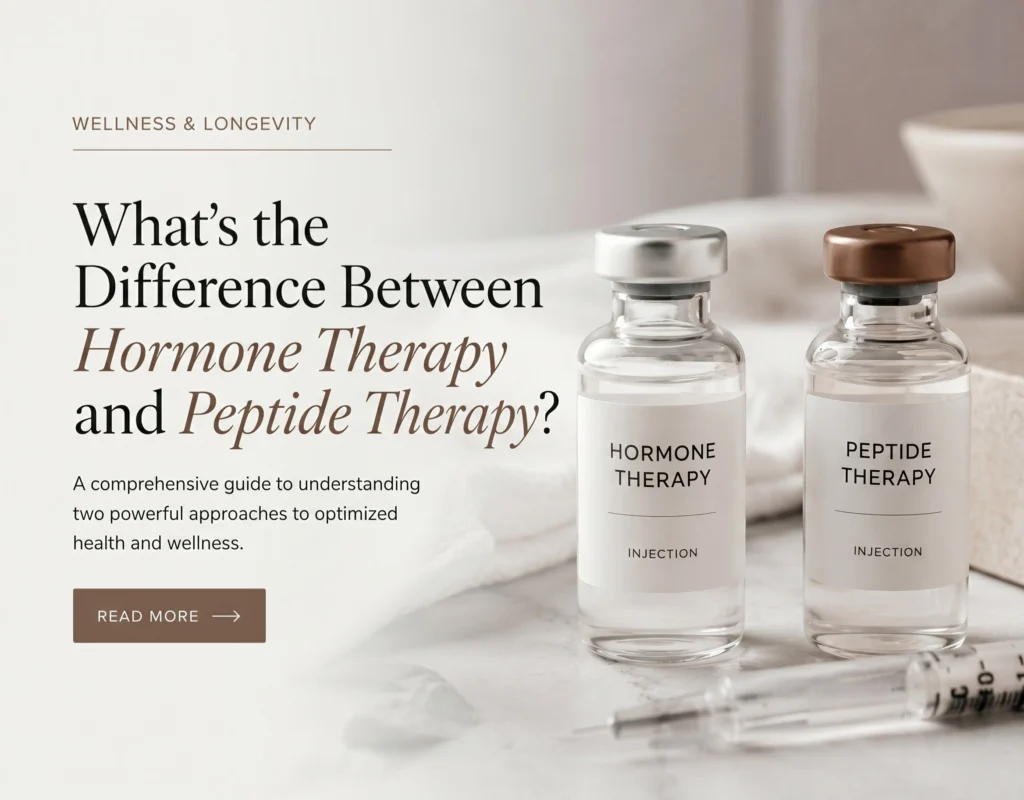
Whether you’re a 35-year-old feeling burned out, a 50-year-old navigating menopause or andropause, or a fitness enthusiast trying to optimize recovery and performance, chances are you’ve started hearing about two powerful options: hormone therapy and peptide therapy.
Both promise better energy, improved body composition, sharper focus, and a higher quality of life. But they work in very different ways, and choosing the wrong one (or skipping one you actually need) can make a big difference in your results.
Let’s break it all down in the simplest way possible.
What Is Hormone Therapy?
Hormone therapy (also called hormone replacement therapy or HRT) is the process of giving your body hormones that it’s no longer producing enough of.
Think of hormones as the body’s chemical messengers—they control almost everything: your mood, metabolism, sex drive, energy, sleep, muscle mass, and more.
As we age or due to medical conditions, our hormone levels naturally decline. Hormone therapy steps in to bring those levels back to an optimal range.
Common Types of Hormone Therapy
Testosterone Therapy (TRT)
Used in men (and some women) to restore low testosterone. Improves energy, libido, muscle, and mood.
Estrogen & Progesterone
Primarily for women in menopause. Relieves hot flashes, brain fog, low libido, and bone loss.
Thyroid Hormone
For hypothyroidism. Restores metabolism, energy levels, and cognitive function.
DHEA
A precursor hormone that declines with age. Supports immunity, vitality, and hormonal balance.
Bioidentical Hormone Replacement Therapy (BHRT) is a popular modern approach that uses hormones chemically identical to what your body naturally produces, making them easier for your body to recognize and use compared to older synthetic versions.
What Is Peptide Therapy?
Peptide therapy is a newer, cutting-edge treatment that uses short chains of amino acids (called peptides) to trigger specific responses in your body.
Instead of replacing a hormone directly, peptides work as signals, telling your body to produce more of its own hormones, repair damaged tissue, burn fat, build muscle, or strengthen your immune system.
You can think of peptides as “instruction codes”—they give your cells very specific instructions to activate certain functions.
Popular Peptides & What They Do
Sermorelin / Ipamorelin
Stimulate the pituitary gland to release more growth hormone. Anti-aging, fat loss, better sleep.
BPC-157
Accelerates healing of tendons, ligaments, and gut tissue. Popular with athletes and injury recovery.
CJC-1295
Boosts growth hormone and IGF-1 levels over time. Supports lean muscle, fat loss, and cognitive clarity.
Semaglutide / Tirzepatide
GLP-1 peptides for weight loss and blood sugar regulation. The active ingredients in Ozempic and Mounjaro.
Thymosin Alpha-1
Powerful immune booster. Used for autoimmune conditions, chronic infections, and overall immunity.
Epithalon
A longevity peptide linked to telomere lengthening, better sleep, and cellular anti-aging.
Benefits of Hormone Therapy
Restores Energy and Eliminates Fatigue
Hormone imbalances are one of the most common—and overlooked—causes of chronic fatigue. TRT and thyroid optimization are often life-changing for people who’ve struggled for years.
Improves Sex Drive and Sexual Function
Low testosterone and estrogen directly impact libido. Hormone therapy is one of the most effective tools for improving intimacy and sexual health.
Builds Muscle and Reduces Body Fat
Optimal testosterone and growth hormone levels make it significantly easier to build lean muscle and lose stubborn fat—even with the same diet and exercise.
Protects Bone Density
Estrogen and testosterone both play a crucial role in keeping bones strong. HRT is a key strategy for preventing osteoporosis.
Improves Mood, Focus, and Mental Clarity
Hormones heavily influence neurotransmitter activity. Restoring balance often leads to sharper focus, less anxiety, and better emotional resilience.
Benefits of Peptide Therapy
Stimulates Your Body’s Own Healing — Naturally
Rather than replacing hormones externally, peptides like BPC-157 and TB-500 activate your body’s internal repair systems—making recovery faster and more thorough.
Powerful Anti-Aging and Longevity Effects
Growth hormone-releasing peptides (GHRPs) and longevity peptides like Epithalon may slow cellular aging and preserve youthful function.
Precise, Targeted Action
Each peptide is designed to trigger a specific biological response—whether it’s fat burning, muscle building, collagen production, or immune boosting.
Lower Risk of Hormonal Disruption
Because peptides work with your body’s own systems rather than replacing them, the risk of suppressing natural hormone production is much lower.
Excellent for Athletic Recovery and Performance
Peptides are popular in sports medicine for their ability to speed up injury recovery and improve performance without the risks of traditional anabolic steroids.
Side Effects & Safety: What You Need to Know
Hormone Therapy: Potential Side Effects
When properly monitored by a qualified physician, HRT is very safe. However, without proper oversight:
- Testosterone therapy can suppress natural testosterone production and affect sperm count
- Estrogen therapy (without progesterone in women with a uterus) raises risk of uterine cancer
- Excess testosterone can convert to estrogen (aromatization), causing water retention and mood swings
- Thyroid hormones, if overdosed, can cause heart palpitations and bone loss
- Long-term HRT requires regular blood work and dose adjustment
Peptide Therapy: Potential Side Effects
Peptides are generally well-tolerated, but not completely risk-free:
- Injection site reactions (redness, swelling) are the most common issue
- Some GH-stimulating peptides can cause water retention or mild numbness in extremities
- GLP-1 peptides (like semaglutide) can cause nausea and digestive discomfort early on
- Quality varies widely, always use pharmaceutical-grade, compounded peptides from licensed providers
- Long-term safety data for newer peptides is still being studied
Who Should Choose Which?
Choose Hormone Therapy if you…
Have a Confirmed Hormone Deficiency
Blood tests show clinically low testosterone, estrogen, thyroid, or other key hormones.
Are Going Through Menopause or Andropause
Natural hormonal transitions that respond well to direct hormone support.
Suffer from Severe Fatigue, Mood Disorders, or Low Libido
Symptoms that clearly track with documented hormone decline.
Choose Peptide Therapy if you…
Want to Optimize, Not Just Treat
Your hormones are technically “normal” but you want to feel and perform at your best.
Are Focused on Athletic Performance or Recovery
Healing injuries faster, building lean muscle, and bouncing back quicker from training.
Prefer a More Natural Approach
You want your body to produce more on its own, rather than receiving it from outside.
Are Focused on Anti-Aging and Longevity
Slowing the aging process, improving cellular health, and extending your healthspan.
Hormone Therapy vs. Peptide Therapy: The Key Differences
Factor | Hormone Therapy (HRT) | Peptide Therapy |
How It Works | Directly replaces deficient hormones | Signals the body to produce or regulate its own hormones |
Best For | Diagnosed hormone deficiencies (low T, menopause, hypothyroid) | Optimization, anti-aging, performance, healing |
Onset of Results | Weeks to months | Weeks to months (varies by peptide) |
Natural Production | May suppress natural production | Encourages natural production |
Side Effects | Possible — especially if dosing is off | Generally mild; highly targeted |
Requires Blood Tests | Yes — essential | Recommended but not always required |
FDA Status | FDA-approved options available | Many are research/compounded; some FDA-approved (GLP-1s) |
Cost (Monthly) | $100–$500+ | $150–$600+ depending on peptide |
Can Be Combined? | Yes — often used together for best results | Yes — often used together for best results |
Table of Contents
