HORMONE THERAPY
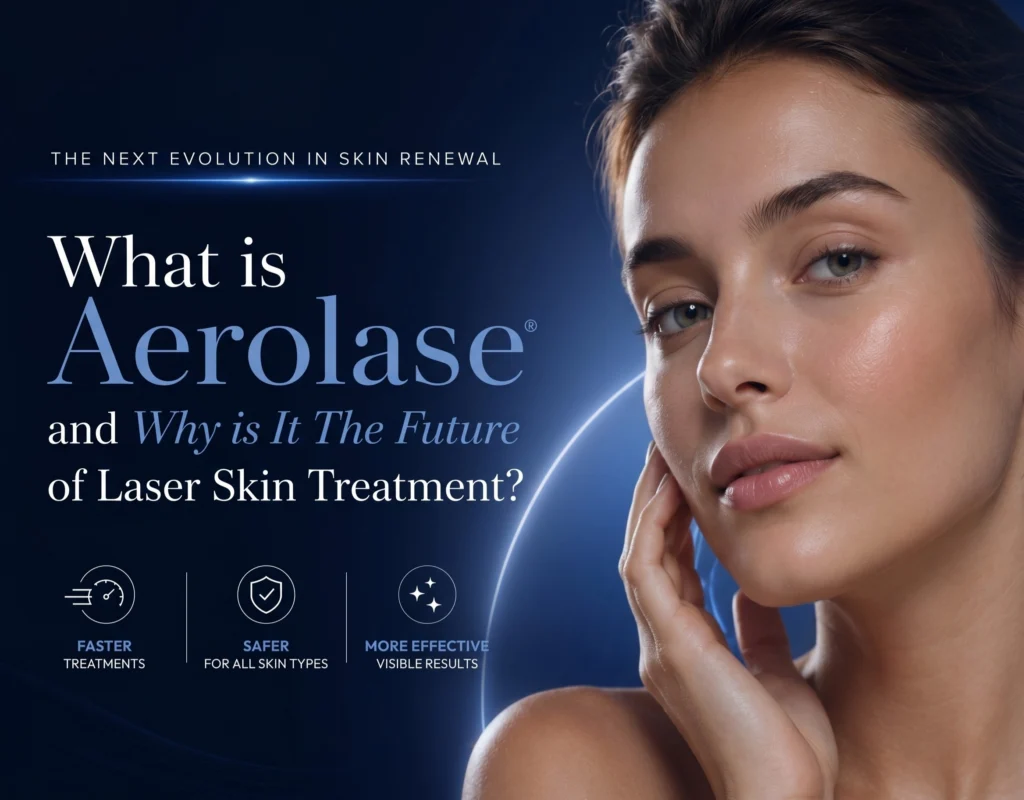
What is Aerolase and Why is It The Future of Laser Skin Treatment?
Clearer, younger-looking skin, with less pain, zero downtime, and results that actually last. Here’s everything you need to know.
“Not all laser treatments are created equal, and once you understand what Aerolase can do, you’ll wonder why anyone would settle for less.”
If you’ve been researching laser skin treatments, chances are you’ve come across the name Aerolase. And if you’ve been wondering whether it really lives up to the hype, the short answer is: yes, absolutely.
As an aesthetician with over a decade of hands-on experience, I’ve worked with many different laser platforms. Aerolase is, without question, one of the most significant breakthroughs I’ve seen in modern skin care technology.
In this article, I’m going to break down exactly what Aerolase is, how it works, and most importantly how it compares to traditional laser machines.
Whether you’re dealing with acne, pigmentation, rosacea, fine lines, or just want glowing, rejuvenated skin, this guide will help you make an informed decision.
What Is Aerolase Laser Treatment?
Aerolase is a next-generation Nd:YAG 1064nm laser platform, specifically designed to deliver powerful, precise energy to the skin with an ultra-short 650-microsecond pulse duration.
That number might sound technical, but here’s what it means for you: the laser works so fast and so gently that your body barely registers it as a threat.
Most traditional lasers pulse energy in longer bursts, which causes heat to build up in the surrounding tissue, resulting in redness, swelling, pain, and days of recovery.
Aerolase, on the other hand, delivers its energy in a fraction of the time, targeting exactly what it needs to without harming anything around it.
The result? A highly effective treatment that feels comfortable, requires no numbing cream in most cases, and has virtually zero downtime.
Patients often describe it as feeling like a light, warm snap, nothing more.
Aerolase’s 650-microsecond technology delivers the same results as traditional lasers, but at a fraction of the discomfort, with no cooling gels, no numbing creams, and no days off from your life.
How Aerolase Works: The Science, Simply Explained
Think of your skin like a city at night.
Traditional lasers are like floodlights, they illuminate everything broadly, including streets you didn’t need lit.
Aerolase is more like a precision spotlight: it goes exactly where it’s needed, does its job, and leaves everything else untouched.
The 1064nm wavelength is uniquely effective because it penetrates deeper into the skin compared to shorter wavelengths.
It targets key chromophores, the biological “targets” in your skin, including melanin (pigmentation), hemoglobin (redness/vessels), and water (collagen stimulation).
This makes it a multi-functional treatment capable of addressing a wide range of skin concerns in a single session.
1. Laser Energy Delivered in 650 Microseconds
The pulse is so short, heat has no time to spread to surrounding tissue, eliminating burns, bruising, and skin damage.
2. Deep Penetration to the Dermis
The 1064nm wavelength reaches deep enough to stimulate collagen production and destroy unwanted pigment or vessels at the source.
3. Your Skin’s Natural Healing Response Activates
The treatment triggers controlled micro-injury at the cellular level, prompting your skin to rebuild with fresh collagen and elastin.
4. Visible Results Begin Within Days
Skin tone evens out, breakouts reduce, texture smooths, and a natural radiance starts to emerge — with results continuing to improve over weeks.
Aerolase vs. Traditional Laser Machines: A Head-to-Head Comparison
This is where things get really interesting.
Let’s look at how Aerolase stacks up against conventional laser treatments, the kind you might find at many clinics using older technology.
FEATURE | ✦ Aerolase Neo / Neo Elite | Traditional Laser |
Pulse Duration | 650 microseconds (ultra-fast) | Milliseconds (slower, more heat) |
Pain Level | Minimal — feels like a light snap | Moderate to high — rubber band snapping, burning sensation |
Numbing Cream Required | Usually Not Needed | Often Required |
Cooling Gel Needed | No | Yes — required to prevent burns |
Downtime | None to minimal — back to life same day | 3–7+ days of redness, peeling, or swelling |
Safe for Dark Skin Tones | Yes — all Fitzpatrick skin types | Often risky for darker tones (risk of burns/pigmentation) |
Skin Conditions Treated | Acne, rosacea, pigmentation, hair removal, veins, anti-aging, melasma & more | Often limited to 1–2 specific concerns per device |
Risk of Hyperpigmentation | Very low | Moderate to high in darker skin tones |
Collagen Stimulation | Deep, effective stimulation | Variable — depends on device and depth settings |
Suitable for Tanned Skin | Yes | Generally not recommended |
Treatment Time | 20–30 minutes (full face) | 30–60 minutes or more |
The difference is significant.
Traditional lasers often force patients to choose between efficacy and comfort, or between treating specific conditions safely on their skin tone.
Aerolase removes those trade-offs entirely.
The Top Benefits of Aerolase Treatment
Zero Downtime
Walk in during your lunch break, walk out glowing. No redness, no peeling, no hiding at home for a week.
Safe for All Skin Types
Fitzpatrick I through VI, including deep olive, brown, and dark skin tones that traditional lasers often can’t treat safely.
Multi-Condition Treatment
One device, one session, and it can simultaneously address acne, pigmentation, redness, and aging signs.
Collagen Rebuilding
Stimulates your skin’s natural collagen production deep in the dermis, creating long-lasting firmness and glow.
Virtually Painless
Most patients rate discomfort as 1–2 out of 10. No numbing cream, no cooling devices, no drama.
Year-Round Treatment
Unlike many lasers, Aerolase can be performed safely even on lightly tanned skin, no season restrictions.
What Skin Conditions Can Aerolase Treat?
One of the most impressive aspects of Aerolase is its versatility.
Rather than needing a different laser for every concern, Aerolase handles them all safely and effectively.
- Acne & Active Breakouts
- Acne Scarring
- Rosacea & Redness
- Melasma
- Hyperpigmentation
- Sun Damage & Age Spots
- Fine Lines & Wrinkles
- Skin Laxity
- Spider Veins
- Hair Removal
- Psoriasis
- Sebaceous Hyperplasia
- Onychomycosis (Nail Fungus)
- Uneven Skin Texture
- Warts & Skin Tags
- Stretch Marks
Whether you’re in your 20s fighting persistent acne or in your 50s looking for skin rejuvenation that actually delivers, Aerolase has a protocol designed for your skin’s specific needs.
Is Aerolase Right for You?
Aerolase is ideal for anyone who wants real, clinically proven results without the inconvenience, risk, or recovery time of traditional laser treatments.
Specifically, it’s a game-changer if you:
- Have a darker skin tone and have been told laser treatments aren’t safe for you
- Have a busy schedule and can’t afford days of downtime
- Are sensitive to pain or have had uncomfortable experiences with lasers before
- Are dealing with multiple skin concerns at once and want a comprehensive solution
- Want to maintain long-term skin health with regular, gentle treatments
- Have previously been turned away by clinics due to skin tone or sun exposure
And honestly? It’s a great option for almost anyone.
Even my clients with fair skin and minimal concerns use Aerolase as a regular skin maintenance and anti-aging treatment, because there’s simply nothing more effective, more comfortable, and more versatile available today.
What Does an Aerolase Session Actually Feel Like?
I always tell my clients: the best part of their first Aerolase session is the look of surprise on their face when it’s over.
Most people come in bracing for pain and leave amazed at how easy it was.
A typical session involves no prep, no numbing cream, and no cooling gels.
You’ll feel a light, rapid warmth on your skin as the handpiece passes over each area.
The whole face typically takes 20 to 30 minutes.
Afterward, skin may appear slightly flushed for an hour or two and then you’re good to go.
Back to work, back to the gym, back to your life.
Most clients see a visible difference within the first 48–72 hours.
Skin looks clearer, brighter, and more even.
With a recommended series of treatments (typically 4–6 sessions spaced 2–4 weeks apart), the improvements are transformative and long-lasting.
Table of Contents
- What Is Aerolase Laser Treatment?
- How Aerolase Works: The Science, Simply Explained
- Aerolase vs. Traditional Laser Machines: A Head-to-Head Comparison
- The Top Benefits of Aerolase Treatment
- What Skin Conditions Can Aerolase Treat?
- Is Aerolase Right for You?
- What Does an Aerolase Session Actually Feel Like?

Trusted Care
Triple Board-Certified Physician
17+ years of experience in specialized women s healthcare.
Piscataway, NJ
908-300-7227
Frequently Asked Questions
1. How many Aerolase sessions will I need?
Most clients achieve excellent results in 4–6 sessions, spaced 2–4 weeks apart.
For maintenance, a quarterly or twice-yearly session keeps your skin looking its best.
Simpler concerns like vascular lesions may resolve in just 1–2 sessions.
2. Is Aerolase safe for all skin tones, including dark skin?
Yes, this is one of Aerolase’s greatest clinical strengths.
The 1064nm wavelength and ultra-short pulse duration make it safe and effective for all Fitzpatrick skin types, including Fitzpatrick V and VI (deep brown and Black skin tones), which many traditional lasers cannot treat safely.
3. Does Aerolase treatment hurt?
Most patients rate the discomfort as very low, typically a 1 or 2 out of 10.
Many describe it as a brief warm snap on the skin.
No numbing cream is required in the vast majority of cases, making Aerolase a far more comfortable experience than traditional laser treatments.
4. Can I wear makeup after my Aerolase treatment?
In most cases, yes.
Because there is little to no disruption of the skin surface, many patients can apply mineral makeup a few hours after treatment.
Your aesthetician will give you specific aftercare guidance based on the areas treated.
5. How does Aerolase differ from IPL (Intense Pulsed Light)?
IPL is not a true laser, it emits broad-spectrum light across multiple wavelengths, which makes it less precise and higher risk for darker skin tones.
Aerolase uses a single, precisely controlled 1064nm wavelength that penetrates deeper, works more effectively on a wider range of conditions, and is significantly safer across all skin types.
6. How long do Aerolase results last?
Results vary by condition.
Vascular lesions treated with Aerolase are often permanently resolved.
Acne management and anti-aging benefits are maintained with periodic sessions.
Collagen stimulation results continue improving for 3–6 months after a treatment series, with effects lasting 1–2 years depending on lifestyle and skin care habits.