HORMONE THERAPY
Hormone Therapy, Menopause & PCOS: Women’s Health Guide
Menopause, perimenopause, and PCOS affect energy, mood, skin, metabolism, and longevity. Learn how personalized hormone care can help.
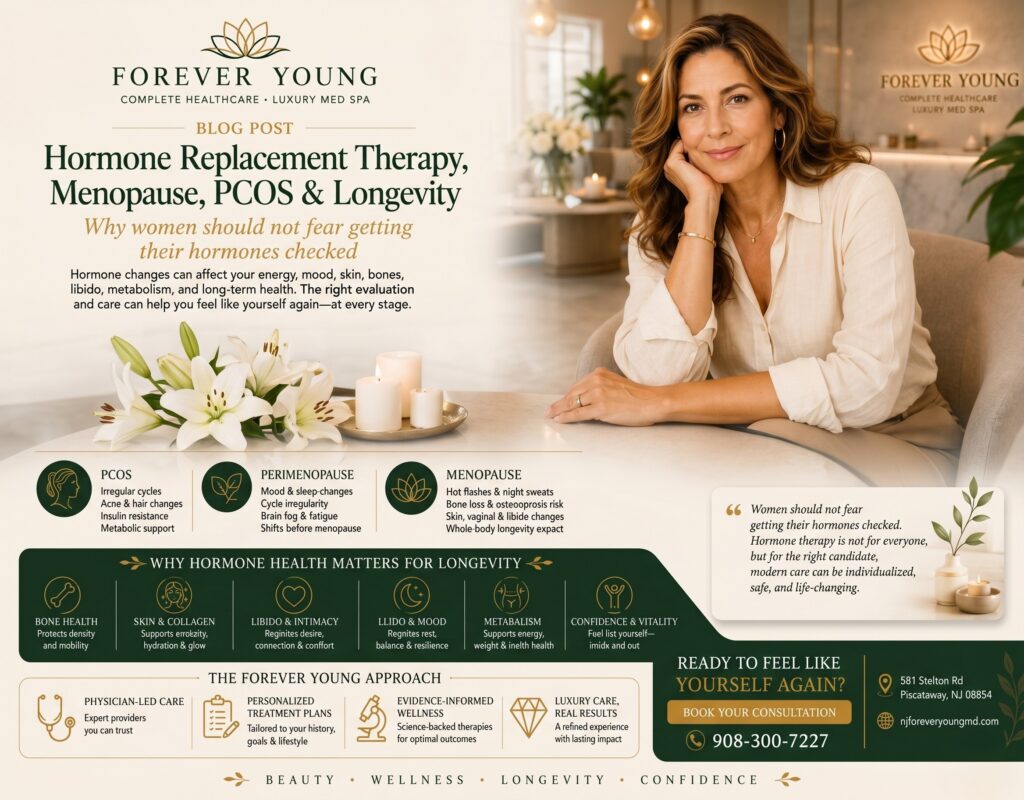
Women’s Hormone Health Deserves a Deeper Conversation
For years, many women have been told that feeling exhausted, emotionally drained, foggy, inflamed, weight-resistant, low-energy, or disconnected from themselves is simply “part of getting older.”
But what if it is not just aging?
What if hormones are playing a much bigger role than most women realize?
At Forever Young Complete Healthcare, we believe women deserve answers, education, and support when their bodies begin to change — whether during PCOS, perimenopause, menopause, or post-menopause.
Hormones influence far more than menstrual cycles and hot flashes.
They affect:
- Energy levels
- Metabolism
- Sleep quality
- Mood and emotional health
- Skin and hair health
- Bone density
- Libido and intimacy
- Muscle strength
- Brain function
- Inflammation
- Overall vitality
And no — women should not be afraid to get their hormones checked.
The goal is not to place every woman on hormone replacement therapy.
The goal is to evaluate symptoms properly, understand the body more clearly, review risks carefully, and determine the best personalized approach for each individual woman.
Hormones Are Part of the Longevity Conversation
Menopause is not simply the end of menstrual cycles.
It is a major hormonal transition that can influence long-term health and quality of life.
As estrogen levels decline, many women experience symptoms such as:
- Hot flashes
- Night sweats
- Brain fog
- Mood changes
- Poor sleep
- Weight gain
- Vaginal dryness
- Low libido
- Joint discomfort
- Skin and hair changes
But the conversation goes much deeper than symptoms alone.
Hormones — especially estrogen — play an important role in:
- Bone health
- Collagen production
- Cardiovascular function
- Vaginal and urinary health
- Skin elasticity
- Metabolism
- Cognitive wellness
After menopause, women become more vulnerable to bone loss, muscle decline, and metabolic changes.
That is why hormone health is also a longevity conversation.
Because aging well is not just about living longer.
It is about staying strong, mobile, energetic, mentally clear, confident, and connected to yourself throughout every stage of life.
Perimenopause: The Stage Many Women Feel Ignored
Perimenopause can begin years before menopause officially happens.
This is often the phase where women start saying:
- “I don’t feel like myself.”
- “Something feels off.”
- “My body feels different.”
- “I’m exhausted all the time.”
Yet many women are told their lab results are “normal.”
Perimenopause symptoms can include:
- Anxiety
- Mood swings
- Heavy or irregular periods
- Insomnia
- Night sweats
- Weight gain
- Breast tenderness
- Emotional sensitivity
- Low libido
- Migraines
- Brain fog
Hormone fluctuations during this stage can be inconsistent, which is why symptoms, cycle changes, age, and clinical history matter just as much as lab work.
Women should not have to wait until symptoms become unbearable before receiving support.
PCOS: Hormone Health Starts Earlier Than Menopause
PCOS (Polycystic Ovary Syndrome) is not menopause, but it is an important part of the women’s hormone health conversation.
PCOS can affect women long before menopause and may influence long-term metabolic and hormonal health.
Common PCOS symptoms may include:
- Irregular periods
- Acne
- Excess facial or body hair
- Hair thinning
- Weight gain
- Insulin resistance
- Ovulation issues
- Difficulty losing weight
PCOS is not simply a fertility issue or “period problem.”
It is a whole-body hormonal and metabolic condition that deserves proper evaluation and long-term care.
Hormone health should be monitored throughout a woman’s life — not only when symptoms become severe.
Hormone Therapy Should Not Be Feared When Done Properly
Many women still feel anxious about hormone replacement therapy because of older studies that created widespread fear around hormones.
Today, the conversation is far more balanced and personalized.
Hormone replacement therapy is not for every woman.
But for the right patient, under proper medical supervision, it can be life-changing.
Hormone therapy may help support:
- Hot flashes and night sweats
- Sleep quality
- Mood stability
- Bone health
- Vaginal and urinary health
- Skin quality
- Libido and intimacy
- Overall quality of life
Proper hormone care should always include:
- Medical history review
- Symptom evaluation
- Risk assessment
- Personalized treatment planning
- Ongoing monitoring
The goal is not anti-aging perfection.
The goal is helping women feel healthier, stronger, and more supported during hormonal transitions.
Skin, Bones, Mood, Libido, and Metabolism Matter
Women are often made to feel superficial for caring about:
- Hair changes
- Skin quality
- Weight gain
- Body composition
- Libido
- Energy levels
But these concerns are not vanity.
They are quality-of-life issues.
Poor sleep affects mood and mental clarity.
Bone loss affects independence and mobility.
Low libido affects intimacy and relationships.
Weight changes affect confidence and metabolic health.
Skin and hair changes affect identity and self-esteem.
Hormone health is not about trying to stay 25 forever.
It is about supporting vitality, confidence, wellness, and longevity through every chapter of life.
The Forever Young Approach to Women’s Hormone Health
At Forever Young Complete Healthcare, we believe women deserve a deeper, more compassionate conversation about their health.
Not:
- “Your labs are normal.”
- “You’re too young.”
- “It’s just stress.”
- “This is part of aging.”
- “You just need to lose weight.”
Instead, we look at the complete picture:
- Symptoms
- Hormone history
- Menopause stage
- PCOS history
- Thyroid health
- Metabolic health
- Sleep quality
- Libido
- Mood
- Skin and hair changes
- Bone health
- Family history
- Lifestyle and stress
For some women, treatment may include hormone replacement therapy.
For others, it may include:
- Lifestyle support
- Weight management
- Metabolic care
- Nutrition guidance
- Wellness therapies
- Skin rejuvenation
- Non-hormonal options
- Preventive health support
The goal is never one-size-fits-all care.
The goal is personalized care that actually listens to women.
Women Deserve to Feel Like Themselves Again
Perimenopause, menopause, and PCOS can affect nearly every part of a woman’s life.
But women are not meant to suffer silently through hormonal changes that can often be evaluated, supported, and treated.
Getting your hormones checked does not mean you are committing to hormone therapy.
It means:
- Choosing information
- Choosing prevention
- Choosing awareness
- Choosing to understand your body instead of fearing it
At Forever Young Complete Healthcare in Piscataway, we help women navigate hormone health, menopause, PCOS, energy changes, weight concerns, skin health, libido, and longevity through a personalized, physician-led approach.
Because aging well is not about pretending time is standing still.
It is about feeling healthy, confident, informed, and fully alive at every stage of life.
Ready to Take the First Step?
If you are experiencing fatigue, brain fog, hot flashes, night sweats, low libido, weight resistance, mood changes, irregular cycles, PCOS symptoms, skin changes, hair thinning, or simply do not feel like yourself anymore, it may be time for a deeper hormone evaluation.
Schedule your consultation with Forever Young Complete Healthcare and take the first step toward feeling like yourself again.
Table of Contents
- Women’s Hormone Health Deserves a Deeper Conversation
- Hormones Are Part of the Longevity Conversation
- Perimenopause: The Stage Many Women Feel Ignored
- PCOS: Hormone Health Starts Earlier Than Menopause
- Hormone Therapy Should Not Be Feared When Done Properly
- Skin, Bones, Mood, Libido, and Metabolism Matter
- The Forever Young Approach to Women’s Hormone Health
- Women Deserve to Feel Like Themselves Again
- Ready to Take the First Step?

Trusted Care
Triple Board-Certified Physician
17+ years of experience in specialized women s healthcare.
Piscataway, NJ
908-300-7227
Frequently Asked Questions
1. What is women’s hormone health?
Women’s hormone health refers to the balance and function of hormones that affect physical, emotional, and reproductive well-being throughout different stages of life.
2. What are common signs of hormone imbalance in women?
Common symptoms include fatigue, mood swings, irregular periods, hot flashes, sleep problems, anxiety, and weight changes.
3. What are common perimenopause symptoms?
Perimenopause symptoms may include irregular periods, hot flashes, night sweats, mood changes, brain fog, and difficulty sleeping.
4. Is hormone replacement therapy safe?
Hormone replacement therapy may be beneficial for some women when prescribed and monitored by a qualified healthcare professional. Treatment decisions should always be personalized.
5. When should women seek help for menopause symptoms?
Women should consider professional support when menopause symptoms begin affecting daily activities, emotional health, sleep, or overall quality of life.